by Bryan Chua
This is Part 2. Part 1 — “When AI Builds AI: Why the Real Moat Is Becoming a Better Operator” — argued that the moat is being a better operator. This one asks where, inside a company, that operator advantage actually lives — and why it survives the next model.

Two weekends ago I re-ran a project review I’d already done. Same context, same files, same problem. The only difference was the model: I’d been working with Opus 4.8 for weeks, and I pointed Fable 5 at the exact same material.
Fable 5 found nineteen development gaps that Opus — run on the same context, repeatedly — had never flagged.
Nineteen. Not one. Nineteen new gaps. Not existing.
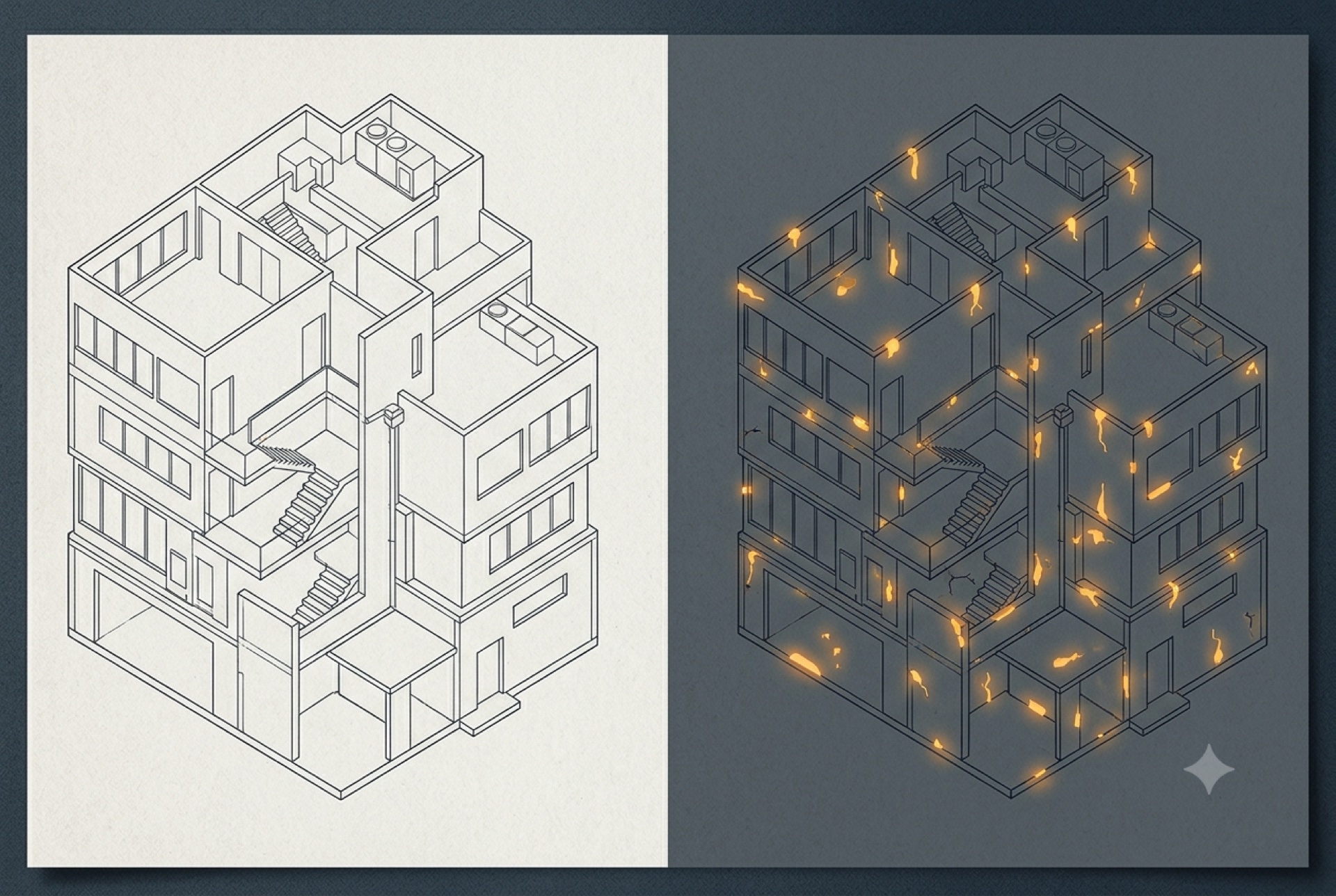
I want to be precise about what that did and didn’t prove. It didn’t prove Fable 5 is “smarter” in some abstract way. It proved something more useful and more uncomfortable: the frontier now moves faster than any company’s planning cycle. The jump between two model generations released months apart was larger than most teams’ entire annual roadmap. If that’s true — and after that weekend I’m certain it is — then it forces a question that I think most AI strategy quietly avoids:
If the frontier moves faster than you can plan, where is the durable advantage?
Last time I landed on “the moat is being a better operator” — knowing how to direct an AI so “the model’s judgment is amplified instead of boxed in.” I still believe that. But it’s a conclusion, not an instruction: it doesn’t tell you what to actually build. So that’s what this post is about.
Two layers, and only one of them is a moat
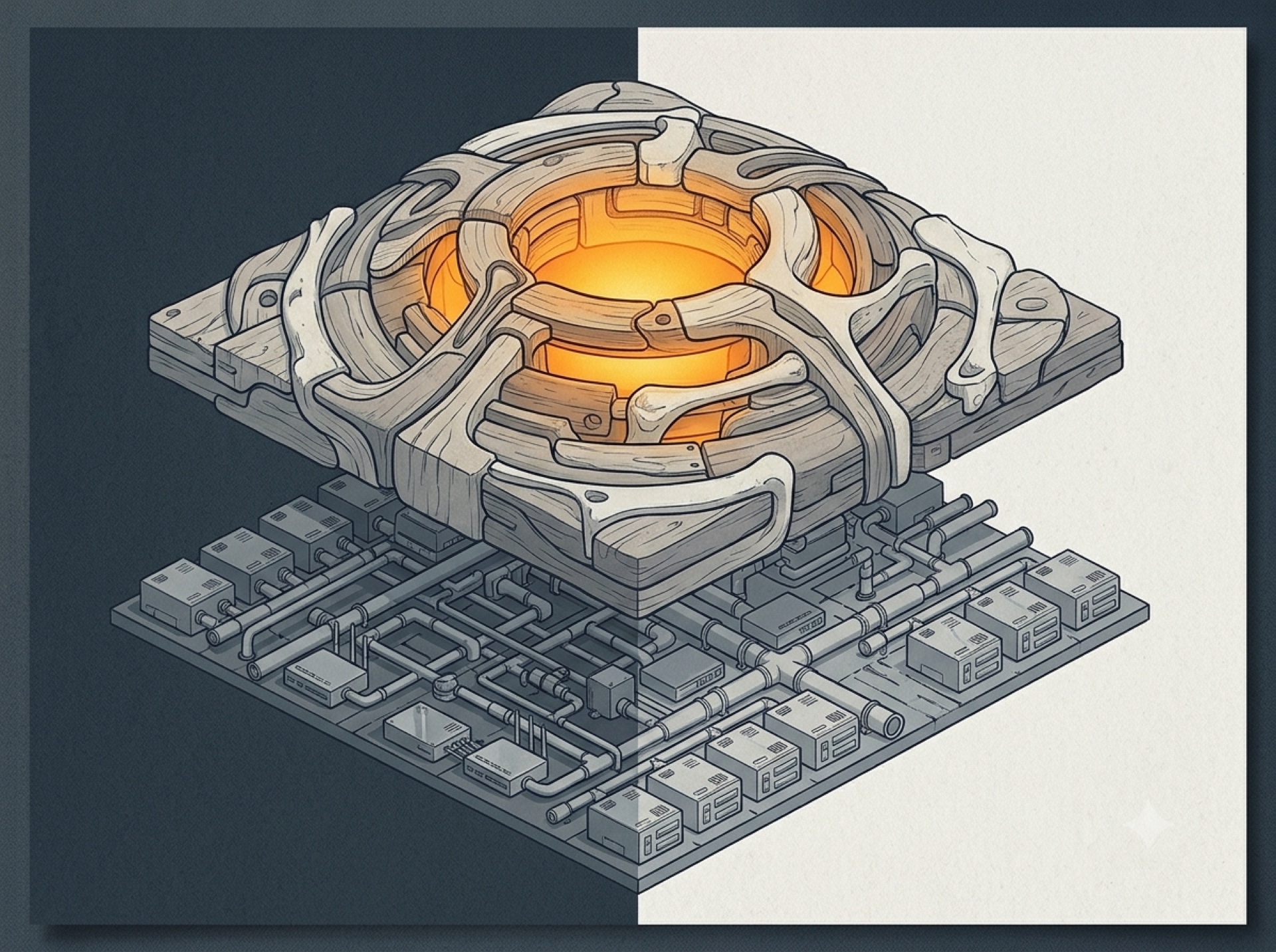
Strip the agent stack down and you’re really choosing between two layers to bet on.
The first is the OS for agents — the platform layer. Routing across models, the control plane, policy-based access control, token budgets, spend dashboards, memory-as-a-service, multi-tenant identity. The plumbing that turns a pile of API keys into something an enterprise can actually run.
The second is the harness for AI — the scaffolding wrapped around a model that turns raw capability into a reliable outcome for one specific job. Context engineering, memory, verification loops, tool orchestration, problem decomposition, the guardrails that catch the model when it confidently does the wrong thing.
Here’s the thing worth internalizing: those nineteen gaps did not come from the platform layer. No amount of routing or governance or spend dashboards would have surfaced them. They came from the harness — the context, the framing, the memory, the way the problem was decomposed and handed to the model. The infrastructure was identical across both runs. The harness is what turned a better engine into a better result.
The asymmetry is the entire argument
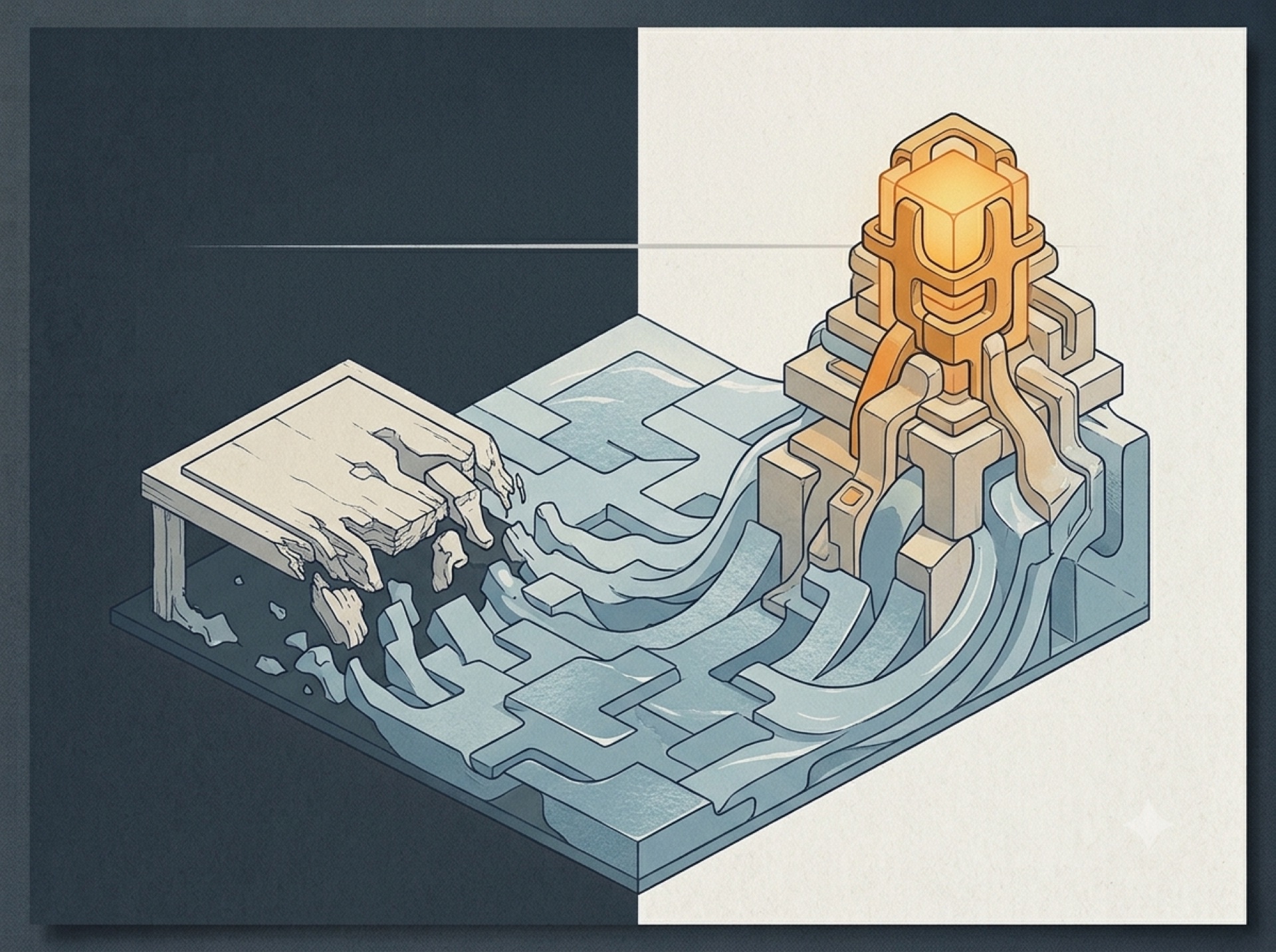
Most people stop at “you need both layers,” which is true BUT useless — don’t listen to the consultants. The decision that matters is which one you pour your scarcest resource — engineering time — into. And the two layers respond to better models in opposite directions.
Better models erode the OS layer. As models get more capable, they need less external orchestration. The routing gets simpler. The scaffolding the platform used to provide, the model starts doing internally. Every capability the frontier absorbs is a feature your platform no longer gets paid for. And you’re not just racing the model weights — you’re racing every hyperscaler and lab converging on “good-enough routing and governance, bundled free with the model.” That’s the gravity. You can’t out-build free-and-bundled.
Better models amplify the harness. The same scaffolding that gave Fable 5 the leverage to find nineteen gaps will give its successor even more. A harness encodes judgment and domain knowledge — the thing a competitor cannot reproduce by buying an API key. When the engine gets better, a good harness doesn’t become obsolete. It becomes more valuable, because it’s now steering a more powerful engine toward the same hard-won, correct outcome.
One layer gets eroded by progress. The other gets amplified by it. If you believe the frontier keeps moving — and the whole point of the Fable 5 weekend is that it does, faster than you think — then betting on the layer that compounds with model progress instead of the one that decays against it isn’t clever. It’s just arithmetic.
What the harness actually is
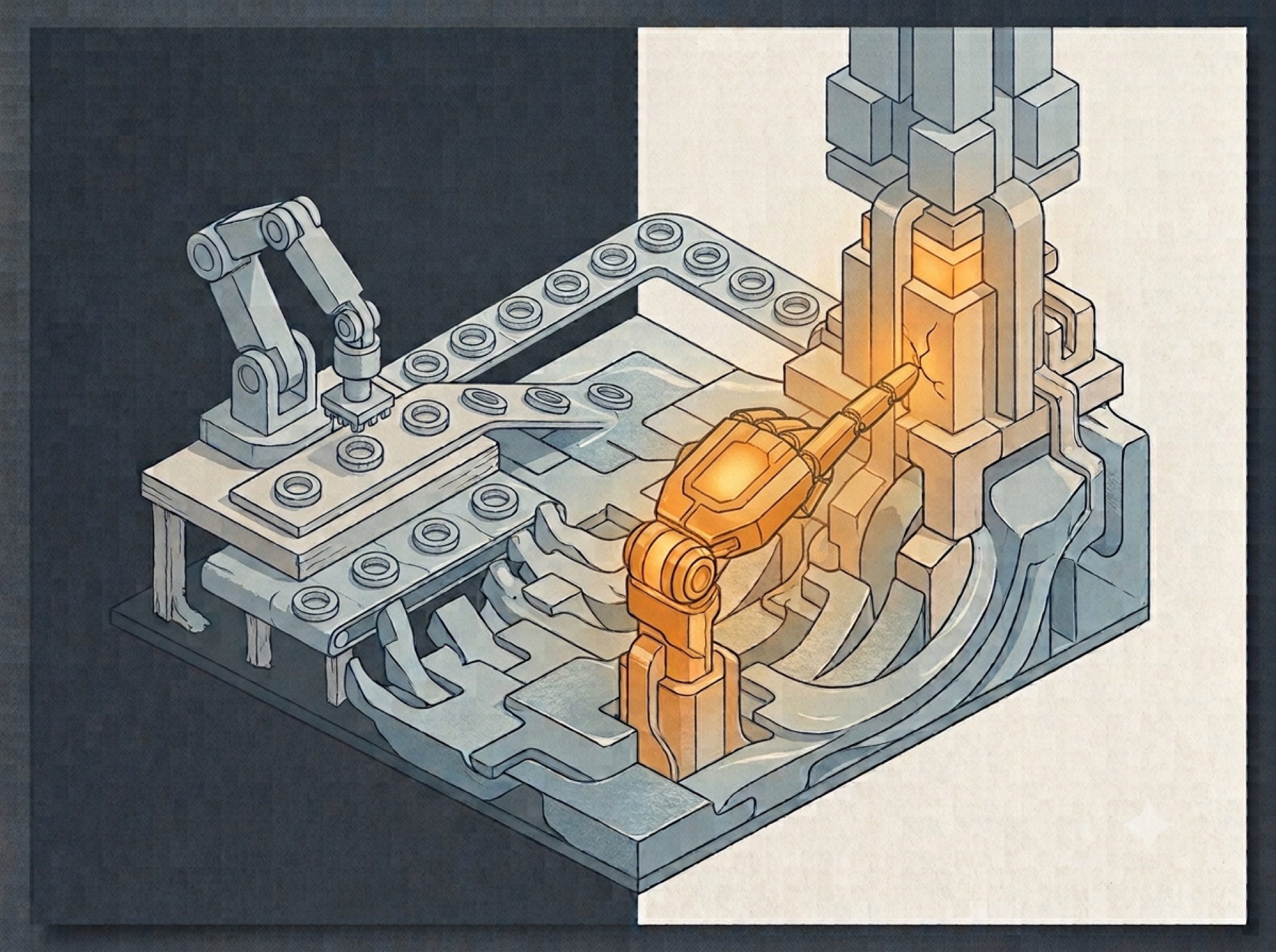
It helps to be concrete about the difference between the two kinds of AI work, because the harness lives entirely in the second. I drew this line in the earlier post:
AI handles the audit. You handle the strategy. AI handles execution. You handle the judgment about what’s worth executing.
That’s still the right cut. What I want to add here is where that judgment goes to live once you’ve had it — because a one-time insight isn’t a moat. A captured, reusable one is.
Execution-level AI does what you describe. You specify the task, it performs it. Valuable, increasingly cheap, increasingly commoditized.
Judgment-level AI tells you what you forgot to describe. It’s the difference between an assistant that writes the function you asked for and one that says “you didn’t handle the case where this is null, and that’s going to bite you in production.” Those nineteen gaps were judgment-level output. Nobody asked for them. The harness made them surface.
That judgment is the moat. Not because it’s secret, but because it’s earned — it’s the accumulated knowledge of how a specific job actually goes wrong, encoded into memory and verification and decomposition so it can be applied again. You can’t buy it off the shelf. You can only operate your way into it.
The uncomfortable part
If the harness is the moat, why isn’t everyone obviously building it? Because it doesn’t look like a moat. It looks like consulting.
A harness gets built by hand, for one client, solving one job. It looks like services revenue, not a product. The platform layer is seductive precisely because it looks like clean, scalable SaaS — and the harness looks like an agency with extra steps.
The discipline that turns it into a real moat is this: refuse to let the harness stay bespoke. Every harness you build by hand for one job has to be designed, from day one, for re-deployment. Build it for client one; ship it to the next ten. The platform — the OS layer — stops being the thing you sell and becomes the runtime your harnesses run on. The chassis, not the car. The engine you buy from the lab. The harness is the only part you build, and the operator running it is the only part nobody can buy.
Get that discipline wrong and you’ve built an agency. Get it right and every engagement with a forward-deployed engineer (FDE) gets and pushes a reusable asset that compounds as the models improve — which, on the evidence of one weekend with Fable 5, they will, and definitely faster than your roadmap.
The job with AI
The job is not to keep up with the models. Nobody can keep up with the models. That race is already lost by everyone, including the people who think they’re winning it.
The job is to operate them better than anyone else — and to capture that operating advantage in something that gets more valuable every time the frontier moves, not less.
I ended the last post with a line I keep coming back to: “The model gave me a better map. I still had to decide where to go.” The harness is how you stop re-deciding from scratch every time — it’s where the map-reading gets written down, so the next, better model inherits it instead of starting blind. This is where self-reflection and learning become an important part of the AI harness.
The model is the engine. Anyone can buy one. The operator is the only part that isn’t for sale.
Previously: When AI Builds AI: Why the Real Moat Is Becoming a Better Operator — this post picks up where that one left off.